


What
Project ‘Titan’ is an innovative 3D Printing Sandbox that ran from January to June 2026. The project investigated the feasibility of using Molten Metal Deposition (MMD) technology to print non-critical and non-structural aluminium spare parts on demand.
Why
Military operations frequently face long lead times for spare parts, while legacy vehicles and vessels suffer from component obsolescence when original equipment manufacturers (OEMs) no longer produce them. Traditional metal 3D printers are poorly suited for frontline environments because they rely on expensive, toxic, and highly explosive metal powders, demand inert shielding gases, and require massive amounts of energy. The MMD printing system addresses these issues by using safe, standard aluminium welding wire, operating on a compact footprint with low power consumption (~1.5 kW), eliminating powder-related hazards, and enabling local production where supply chains fail.
How
The project followed a structured five-phase roadmap over six months:
- Use Case Selection: Using a concept selection mapping canvas, the team evaluated 15 candidate components based on failure rate and operational impact, shortlisting six high-value parts for DAF and Oshkosh trucks as well as Naval pumps.
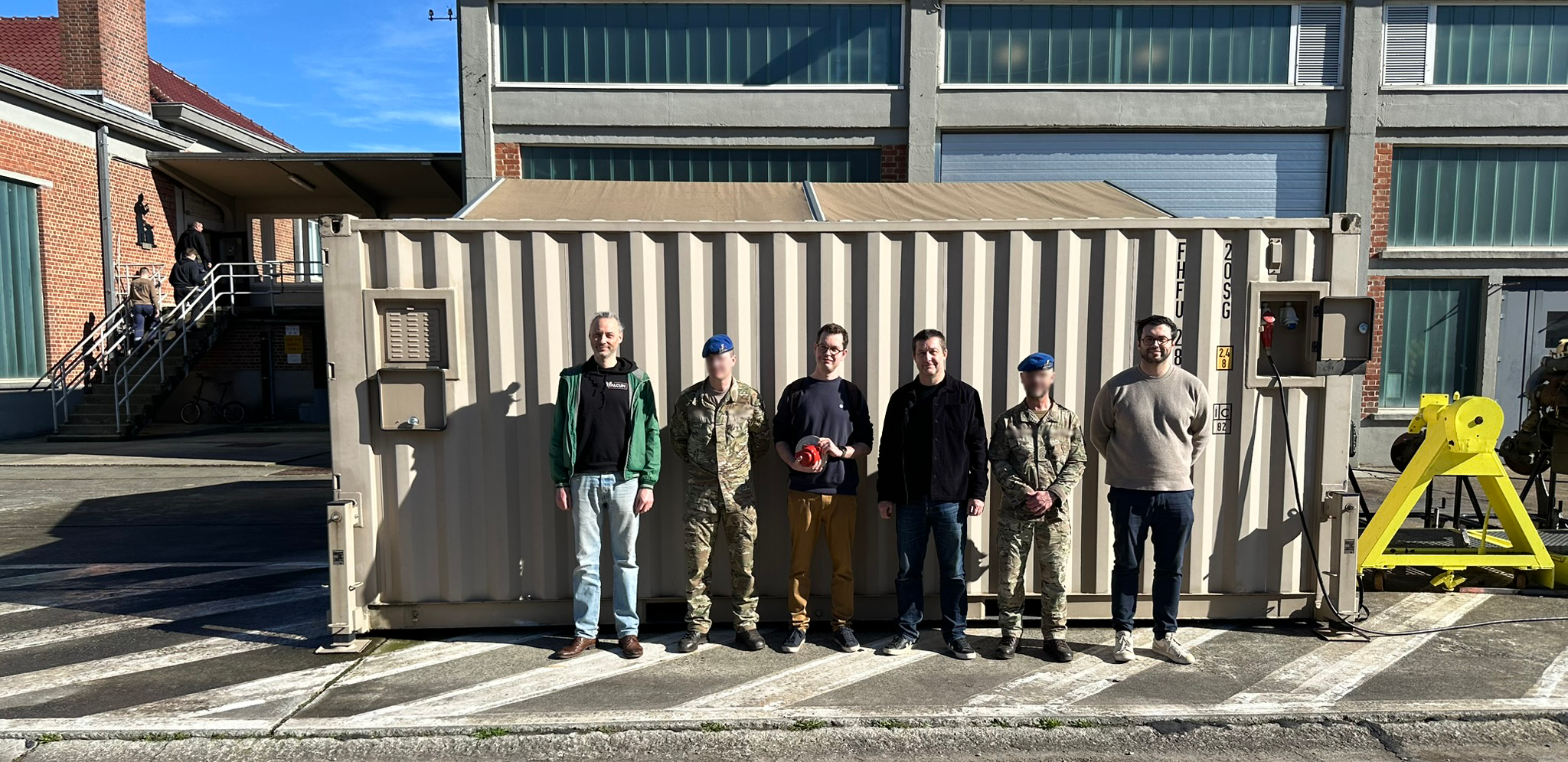
- Field Deployment: In March 2026, the unit underwent a field trial inside a mobile container at the AM Village international military exercise in Albacete, Spain.
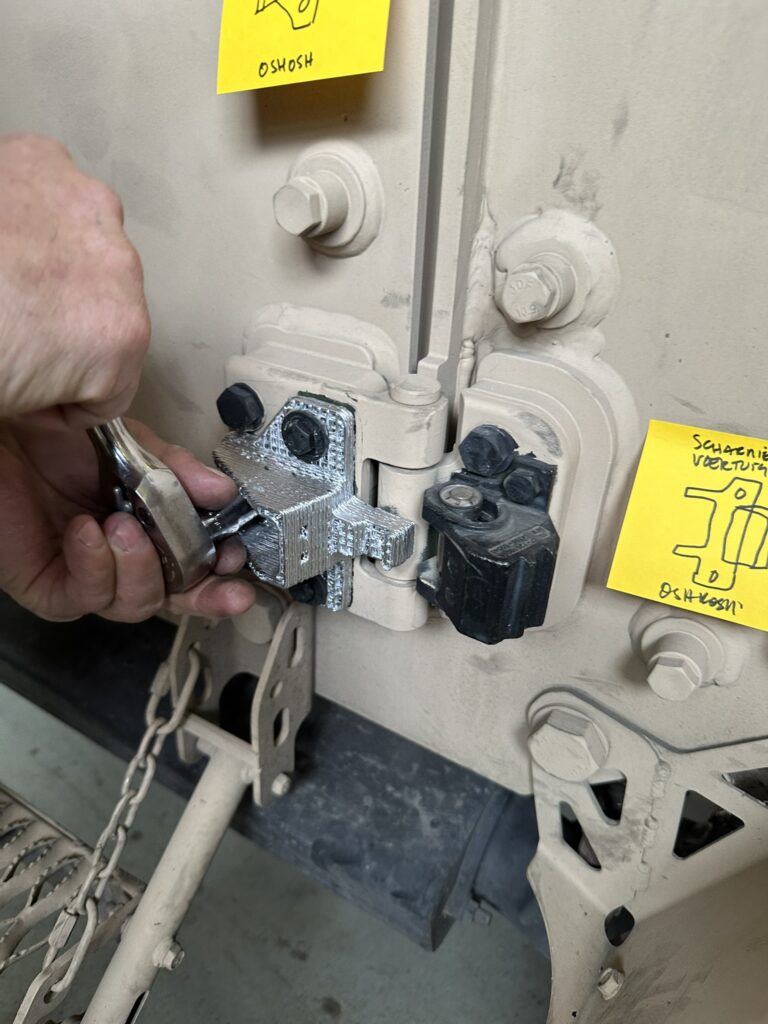
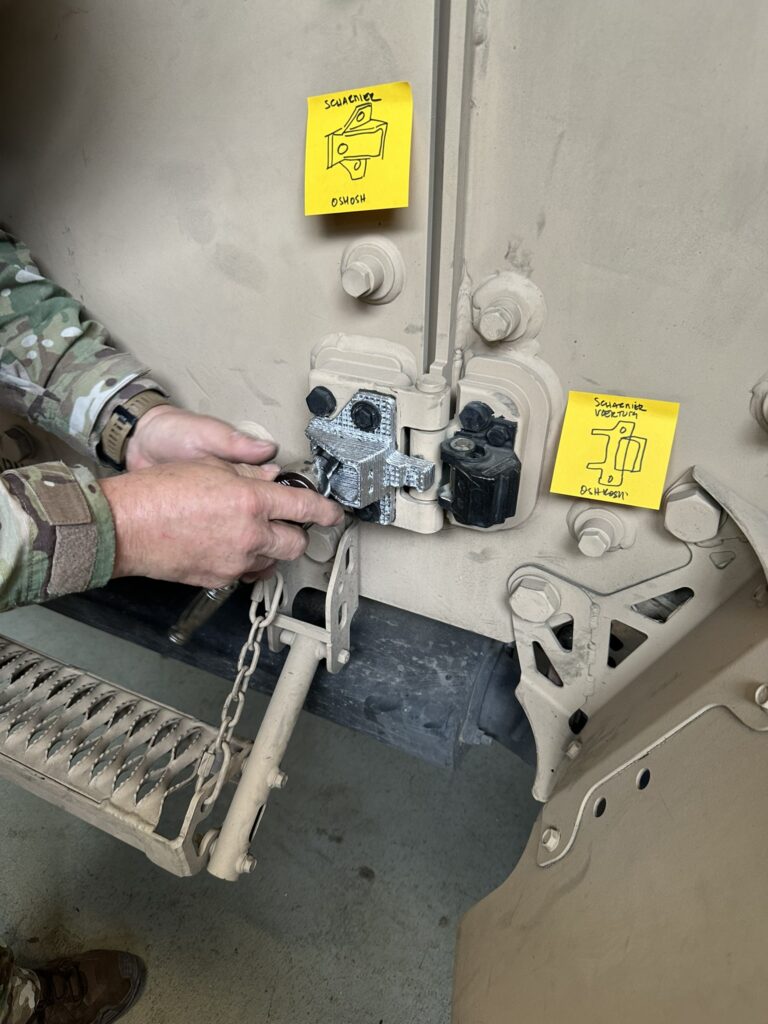
- Prototyping & Testing: Functional prototypes, such as an Oshkosh vehicle door latch, were printed first in PET CF polymer and then in aluminium to validate mechanical fit, strength, and weldability.
- Operational Evaluation: Defence operators conducted hands-on testing, evaluations, and weldability trials from May to June 2026.
- Validation: Structured operator feedback was gathered via evaluation forms to validate Key User Requirements (KUR), run competitive benchmarking, and map out future deployment.
Result
Project Titan successfully proved that Molten Metal Deposition is a safe, viable, and energy-efficient solution for producing military-grade aluminium spare parts in expeditionary environments. Practical testing on functional components confirmed solid mechanical performance and seamless integration with standard welding practices. While the printer hardware proved ideally suited for military environments, user evaluations indicated that the control software is currently too complex for direct, autonomous use by frontline operators. As a result, the project concluded that the technology is currently best positioned within a centralised defence expertise centre, where dedicated technicians can oversee production while software usability continues to be streamlined.